The search box was a compromise. Multimodal AI is the correction.

1. The End of the “Keywords” Era
You have been there. Stare at a search bar, trying to guess the magic combination of words that will unlock the answer you need. You type “thing that holds cables on desk,” hoping the algorithm will somehow understand you mean a cable management clip. After three attempts and a dozen irrelevant results, you finally stumble onto the right page. This exhausting ritual of “Google-fu” has defined our relationship with the internet for over two decades.
Here is the core problem. Traditional search is a “pull” system. It demands that you know what you are looking for and exactly how to describe it. That puts an enormous burden on the human side of the equation. You become the translator between your brain and the machine.
But something fundamental has shifted. Multimodal AI – artificial intelligence that processes text, images, audio, and video simultaneously – is flipping that model on its head. Instead of pulling answers out of a rigid system, this technology pushes relevant information to you based on rich, layered context.
The thesis is straightforward: the search bar is becoming a relic. In its place, “Discovery Engines” are building a more intuitive, human-centric way to interact with technology. And the pace of this transition is accelerating fast. According to Gartner, traditional search engine volume is projected to drop 25% by 2026, largely driven by AI chatbots and virtual agents that serve as substitute answer engines.
2. What is Multimodal Discovery? The Science Behind the Shift
Defining Multimodality
Think of it this way. You are standing in front of a broken dishwasher. With traditional search, you would need to identify the brand, look up the model number, describe the symptom in text, and hope someone on a forum posted the same problem.
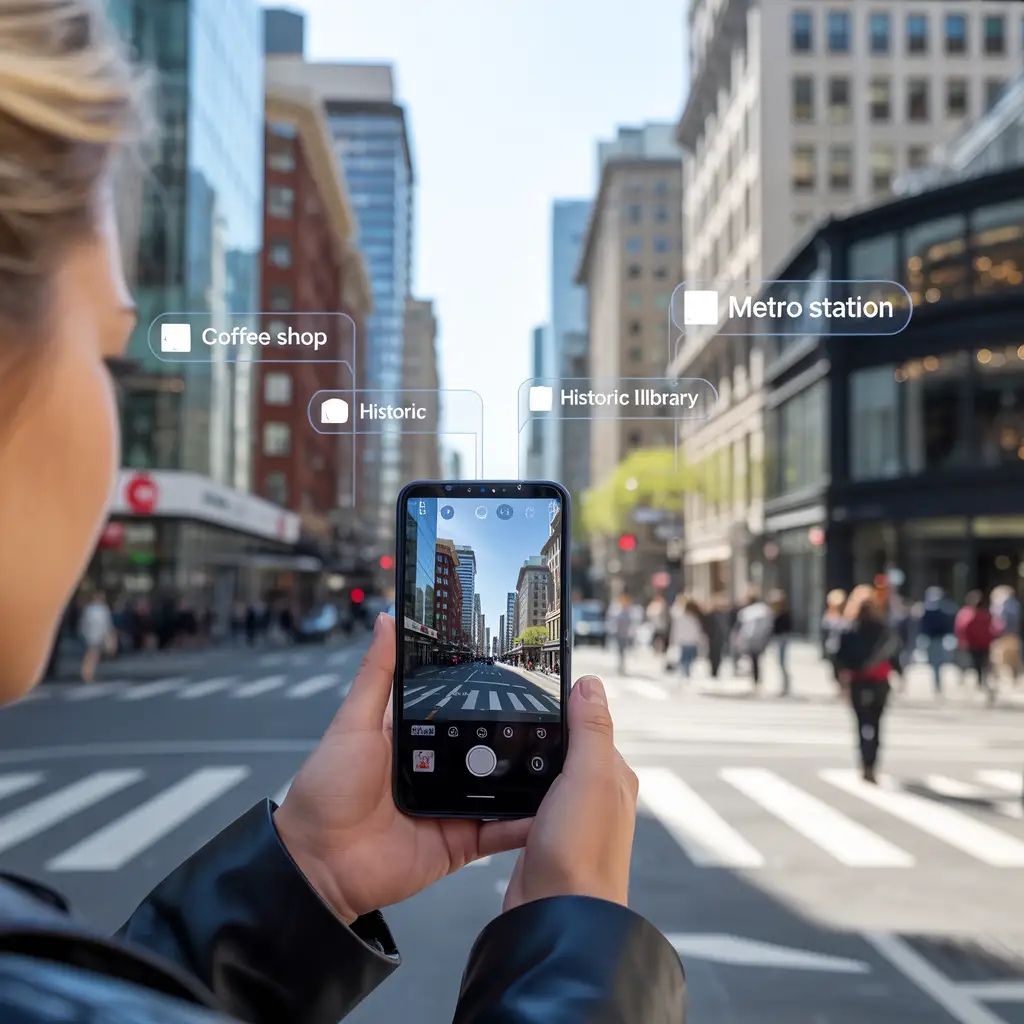
With multimodal AI, you point your phone’s camera at the dishwasher, say “It makes a grinding noise when it starts the wash cycle,” and the AI sees the model, hears your description, and delivers a step-by-step repair guide – all within seconds. That is multimodality in action: the AI processes visual, audio, and text data streams together to understand your complete situation.
This is not science fiction. In March 2026, Google launched Search Live globally across more than 200 countries. This feature allows users to open the Google app, point their camera at the world, and have a real-time voice conversation with search about what they see and hear.
Context is King
The difference between old search and new discovery comes down to one word: context.
| Feature | Traditional Search | Multimodal AI Discovery |
| Input | Typed keywords | Text + voice + image + video |
| Understanding | Character matching | Meaning and intent recognition |
| Output | A list of blue links | A synthesized, actionable answer |
| Context Awareness | Almost none | Deep situational understanding |
| User Effort | High (you must know the right words) | Low (just show, speak, or describe naturally) |
| Personalization | Based on past clicks | Based on real-time environment and behavior |
With traditional search, you operated in isolation. Each query was a standalone shot in the dark. Multimodal discovery treats every interaction as part of a richer conversation. The system understands not just what you said, but where you are, what you are looking at, and what you likely need next.
The Technical Backbone: Vector Databases and Semantic Search
What makes this possible at a technical level? Two concepts are essential to understand: Vector Databases and Semantic Search.
Traditional search engines rely on keyword matching – they scan for the exact characters you typed. Semantic search, on the other hand, converts your query into a mathematical representation called an embedding (essentially a long list of numbers). This embedding captures the meaning of your words, not just the characters. As Weaviate explains in their vector search overview, vector databases can search through millions of data points in milliseconds by finding items that are semantically close to your query, even if the exact words never overlap.
For example, a search for “how to fix a looping error” would match content about “debugging infinite loops” – because the meaning is the same, even though the words are different.
This architecture extends beyond text. Modern embedding models convert images, audio clips, and video frames into the same type of numerical representation. That allows a single AI system to understand and connect information across every modality. It is the reason you can show a photo of a plant to an app and instantly get its species name, care instructions, and nearby nurseries that sell it.
The vector database market reflects this momentum. The industry was valued at approximately $2.46 billion in 2024 and is projected to reach $10.6 billion by 2032, growing at a 27.5% compound annual growth rate.
3. Overcoming “Information Overload”: From Millions of Links to One Clear Answer
The Pain Point: The Paradox of Choice
Here is a frustration nearly everyone shares. You search for “best laptop for graphic design” and receive 340 million results. You open ten tabs, skim five articles, and still feel uncertain. This is the Paradox of Choice in action – too many options lead to decision paralysis, not better decisions.
Traditional search gives you a firehose of information. It does not tell you which results are actually relevant to your specific budget, software needs, or workflow. The burden of synthesis falls entirely on you.

The Solution: Multimodal AI as Your Personal Curator
Multimodal AI changes this dynamic completely. Instead of delivering a list of links, it acts as a curator. It takes multiple sources, synthesizes the information, and presents you with a clear, contextual answer tailored to your specific situation.
This is the difference between a library that hands you a stack of 50 books and a personal research assistant who reads them all and gives you a two-page brief.
Real-World Examples of Discovery in Action
Visual Discovery: Vision-enabled applications now let you snap a photo of a dish at a restaurant and instantly get the recipe, nutritional information, and nearby grocery stores where you can buy the ingredients. Identify a wildflower on a hike. Scan a piece of furniture to find where to buy it. The camera becomes your search bar.
Voice-Activated Research: Imagine you are driving to a client meeting. You ask your car’s AI assistant, “What are the key market trends in renewable energy for the first quarter of 2026?” The system pulls data from multiple trusted sources, synthesizes the key findings, and delivers a spoken summary. You arrive prepared, and you never took your eyes off the road.
Cross-Modal Problem Solving: A mechanic photographs a corroded engine component, and the AI cross-references it against thousands of maintenance records and technical manuals. It identifies the part number, suggests compatible replacements, and even flags a relevant service bulletin – all from a single photo and a spoken question.
These are not edge cases. They represent the emerging standard for how professionals and consumers alike interact with information.
4. The Impact on the US and European Markets
Consumer Behavior in the United States
The ground was already shifting before multimodal AI arrived. In the US, the rise of “Social Discovery” laid the groundwork. Younger consumers increasingly treat platforms like TikTok and Instagram as primary search engines, favoring short-form video answers over text-based results.
Multimodal AI is the professional evolution of this trend. It takes the same intuitive, visual-first approach and wraps it in the power of large-scale AI models that can process and synthesize information across formats. According to an FTI Consulting report from February 2026, AI platforms are now used by a substantial share of consumers for information discovery, trailing traditional search engines only slightly. YouTube ranks as the third most-used platform for finding information – a clear signal that users prefer multimodal, video-based search responses.
The implications are significant. Businesses that rely solely on traditional SEO and text-based content risk becoming invisible in a world where discovery happens through cameras, voice assistants, and AI-curated feeds.
Privacy and Regulation: Europe Leads the Way
Europe is tackling the other side of the equation: trust. Multimodal AI is incredibly powerful, but it also raises legitimate privacy concerns. When your phone’s camera and microphone become search tools, where does that data go? Who stores it? How is it used?
This is where the EU AI Act enters the picture. This landmark legislation – the first comprehensive AI regulation by a major governing body – entered into force on August 1, 2024, and becomes fully applicable for most operators by August 2, 2026. It establishes a risk-based framework that imposes escalating obligations based on the potential harm an AI system may pose. High-risk applications face strict requirements around data governance, transparency, human oversight, and cybersecurity.
European developers are responding to this regulatory environment by pioneering On-Device Multimodal AI. This approach processes voice and camera data directly on the user’s phone, without sending it to external servers. Your data stays on your device. This “Privacy-by-Design” architecture satisfies the stringent requirements of the EU AI Act while still delivering the full power of multimodal discovery.
The Transatlantic Approach
The US and European markets are converging on a shared conclusion from different directions. American consumers are driving demand for more intuitive, multimodal experiences through their behavior. European regulators are ensuring that these experiences are built on a foundation of trust and privacy. Together, they are shaping a global standard for responsible, human-centric AI discovery.
5. Why This Matters for Professionals and Entrepreneurs
Productivity Gains: From 30 Minutes to 30 Seconds
The single biggest impact for working professionals is the reduction in “time-to-answer.” Consider a supply chain manager who needs to verify the specifications of a component from an overseas supplier. In the old model, this involved searching for the supplier’s catalog, downloading a PDF, scanning for the right part number, and cross-referencing it with internal documentation. That process could take 20 to 30 minutes.
With multimodal AI, the manager photographs the component’s label, asks “Does this meet our ISO 9001 specifications?”, and gets a verified answer in under a minute. The AI reads the label, matches it against the relevant standards, and surfaces any discrepancies.
That is not a small improvement. Across an organization, those saved minutes compound into thousands of recovered hours per year.
The “Smart App” Ecosystem: Building Without a Search Bar
A new generation of applications is being built specifically without traditional search bars. These apps rely on proactive AI assistance – they anticipate what you need based on context, rather than waiting for you to ask.
Think of project management tools that automatically surface relevant documents when you open a task. Or design software that suggests color palettes based on an image you dropped into the canvas. Or a field service app that identifies equipment from a photo and pre-loads the maintenance history before the technician types a single character.
This is the architecture of the future: applications built around Neural Processing Units (NPUs), On-Device Inference, and Latent Space representations that enable fast, private, context-aware intelligence.


The Future of SEO: Optimize for Intent, Not Just Text
For businesses and content creators, the shift to multimodal discovery demands a fundamental change in strategy. Traditional SEO focused on ranking for specific keywords. The new playbook is about optimizing for intent and visuals.
Here is what that looks like in practice:
Structure your content for AI comprehension. Use clear headings, structured data (schema markup), and well-organized information that AI systems can easily parse and cite.
Invest in high-quality visual assets. As camera-based search grows, businesses with strong product images, accurate business profiles, and optimized visual content gain a significant discovery advantage. When a user points their phone camera at your storefront, your business profile, reviews, and menu should appear instantly.
Think in terms of entities, not keywords. Modern AI does not rank words – it ranks understanding. Build your content around your brand as a recognizable entity that AI systems can identify across platforms and modalities.
According to research from the Search Everywhere framework, AI platforms cite sources rather than rank them. Visibility now depends on being referenced as a trusted authority, not just outranking competitors on a results page.
6. A World Without Boxes
The search bar was never the ideal interface. It was a compromise – the best tool we had because computers were not yet smart enough to understand us. We adapted to the machine’s limitations: learning Boolean operators, crafting keyword strings, and developing the instinct for which words would return the right results.
Now, the machine is adapting to us.
Multimodal AI understands your voice. It sees what your camera sees. Reads the context of your environment. It synthesizes millions of data points into a single, clear answer. The technology has finally caught up to the way humans naturally communicate – through a fluid mix of sight, sound, and language.
The future is not about finding information. It is about information finding you at the exact moment you need it.
That shift changes everything: how we shop, how we learn, how we work, and how businesses reach their customers. The organizations and individuals who embrace this transition early will have a substantial advantage. Those who wait for the search bar to disappear entirely may find they have already been left behind.